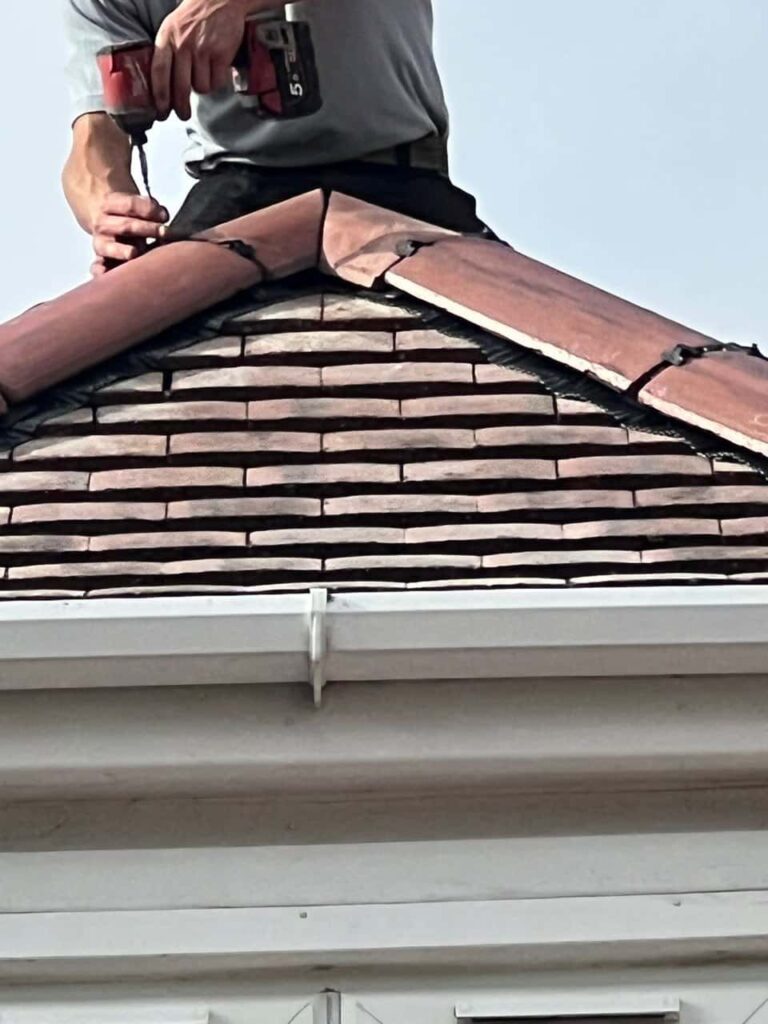
Roof repairs can be highly effective when deterioration is confined to particular tiles, junctions or sections. However, there comes a point where damage is no longer localised. When numerous parts of a roof are deteriorating at the same time, continually repairing individual defects may no longer restore the dependable performance expected from the roofing system as a whole.
For property owners in Broughton Astley, Leicestershire, full roof replacement may become appropriate when deterioration is extensive, recurring and affecting multiple components. The decision should not be based on one isolated defect or the age of the roof alone. A professional assessment is needed to determine whether sound sections can still be retained or whether renewal provides the more suitable long-term approach.
When Does Roof Deterioration Become Extensive Enough for Replacement?
A heavily deteriorated roof usually shows a pattern of problems rather than one obvious failure.
Individual tiles may be damaged in several areas, mortar can be breaking down, flashing may have deteriorated and previous repairs may be surrounded by increasingly weathered materials. Water ingress can also begin appearing from different parts of the roof.
Signs that justify a wider assessment can include:
- Numerous cracked, slipped or deteriorated tiles
- Recurring leaks in different locations
- Widespread deterioration around ridge or verge details
- Several vulnerable roof junctions
- Increasingly frequent repair requirements
- Large areas of weathered roofing materials
- Previous repairs surrounded by further deterioration
- Problems affecting multiple sections at the same time
None of these signs should automatically lead to replacement on their own. It is the overall pattern and condition of the roof that matters.
Localised Damage and General Deterioration Are Different
One of the most important distinctions when assessing a roof is whether problems are concentrated or widespread.
A handful of damaged tiles within an otherwise sound roof covering can often be repaired effectively. Likewise, a single flashing defect does not normally mean that every other part of the roof needs attention.
General deterioration is different. When materials across large sections have reached a similar stage of weathering, repairing one area may simply leave another vulnerable section to develop problems soon afterwards.
Full replacement allows the roof to be considered as one complete system rather than a collection of increasingly separate repairs.
Repeated Repairs Can Reveal a Changing Roof Condition
The fact that a roof has previously been repaired is not itself a concern. Well-executed local repairs can remain effective for many years.
What matters is whether the pattern of repairs is changing.
If attention is repeatedly required in new areas, it may indicate that the original roofing materials are becoming less dependable more generally. One month the problem might involve tiles, while a later issue appears around a different junction or section.
At this stage, assessing the whole roof becomes more useful than considering each new defect independently.
Replacement Creates a Consistent Roof Covering
Heavily deteriorated roofs can contain materials in significantly different conditions.
Some tiles may be original, others may have been replaced, and various sections may have received repairs at different stages. Although this does not automatically cause problems, widespread deterioration can eventually make maintaining consistent performance more difficult.
Full replacement provides an opportunity to establish a complete roof covering with components designed to work together.
This consistency can be particularly valuable where existing materials are no longer providing dependable weather protection across large areas.
The Condition Beneath the Visible Roof Covering Can Be Assessed
Tiles and slates are only the visible part of the roofing system.
When a roof covering is removed as part of replacement work, the underlying areas can be properly assessed. This is particularly important on heavily deteriorated roofs where long-term defects may have allowed moisture to reach materials beneath the surface.
A replacement project allows the roofing system to be approached comprehensively rather than making assumptions based only on what is visible externally.
Any areas requiring appropriate attention can then be identified before the new roof covering is completed.
Persistent Water Ingress Can Indicate Wider Weaknesses
One recurring leak can sometimes result from one difficult-to-identify local defect. Several leaks developing across unrelated areas provide different information.
When water ingress repeatedly appears in different parts of the property, it becomes important to assess whether the roof contains numerous vulnerable points.
Repair may still be possible, depending on the findings. However, where leaks are associated with widespread material deterioration, replacing the complete roof covering may provide a more coherent solution than continually responding to individual entry points.
Widespread Tile Deterioration Changes the Repair Decision
Individual damaged tiles can normally be treated very differently from a roof covering where large numbers of tiles are deteriorating.
When neighbouring materials remain secure and serviceable, replacing individual units can restore the affected area effectively.
However, if tiles across the roof have become increasingly fragile, cracked or unstable, working around them can reveal further weaknesses. Repairing one section may disturb adjacent materials that are already heavily weathered.
The overall condition of the covering therefore needs to be considered before deciding whether targeted repairs remain practical.
Ridge, Verge and Junction Problems Can Add to the Overall Picture
A roof may contain several types of deterioration at the same time.
Weathered ridge details may coexist with failing verge sections, vulnerable flashing and deteriorating tiles. Each problem could potentially be approached individually, but together they can indicate that the roof is becoming generally less reliable.
A professional inspection considers how these elements interact.
When deterioration extends across multiple roof details, replacement can provide an opportunity to restore their performance as part of one coordinated roofing system.
Previous Repairs Should Be Considered in Context
A heavily repaired roof does not automatically require replacement.
The important question is why the repairs were needed and whether they remain effective. A roof may contain several old repairs that continue to perform perfectly well.
The situation becomes more significant when new deterioration repeatedly develops around previously repaired areas or across untouched sections.
This can indicate that the condition of the original roofing materials is changing more broadly, making a whole-roof assessment appropriate.
Roof Age Alone Should Not Determine the Decision
An older roof is not automatically a failed roof.
Some established roofs continue to perform reliably because their materials and important details remain in serviceable condition. Conversely, the suitability of a roof cannot be judged purely by how many years it has been in place.
Condition is the more useful measure.
A professional assessment should consider material deterioration, weather resistance, previous repair history and the number and distribution of current defects before determining whether replacement is appropriate.
Replacement Can Address Multiple Connected Problems Together
One of the main advantages of full roof replacement on a heavily deteriorated roof is the ability to address the roofing system comprehensively.
Instead of separately treating tiles, underlay, junctions and other vulnerable areas as individual problems, the roof can be renewed in a planned sequence.
This can be particularly appropriate where the existing defects are connected or where deterioration has progressed across such a large area that isolating one reliable repair zone has become difficult.
The aim is not simply to replace materials because they are old, but to restore dependable roof performance where extensive deterioration has made continued localised repair less suitable.
When Repairs May Still Be the Better Approach
Full replacement should not be considered automatically whenever a roof develops several problems.
If deterioration remains confined to identifiable sections and the majority of the roofing system is sound, targeted repairs may still provide an effective solution.
This is why inspection is essential.
The purpose of professional assessment is to distinguish between a roof containing several repairable defects and one where deterioration has become sufficiently widespread that complete renewal is the more appropriate approach.
Why the Entire Roof Should Be Assessed Before Replacement
A decision as significant as full roof replacement should be based on the condition of the complete roofing system.
At Broughton Astley Roofing Repairs, we consider the roof covering, visible deterioration, vulnerable junctions and the pattern of previous and current problems before determining what type of work is appropriate.
For homeowners in Broughton Astley, this helps avoid making decisions based solely on one leak or one damaged section. It also provides a clearer understanding of whether repairs can restore reliable performance or whether widespread deterioration makes replacement more suitable.
The Objective Is Long-Term Roof Reliability
Whether a roof is repaired or replaced, the objective should be the same: dependable protection for the property.
For a roof with localised deterioration, carefully targeted repairs can achieve this without unnecessary work elsewhere.
For a heavily deteriorated roof, however, the number and distribution of weaknesses can eventually make a complete approach more appropriate. Replacement creates the opportunity to restore consistent performance across the whole roof rather than repeatedly responding to new problems as they emerge.
The correct decision depends on what the inspection reveals.
Conclusion
Full roof replacement can be suitable for heavily deteriorated roofs when problems have become widespread rather than remaining confined to individual areas. Recurring leaks, extensive tile deterioration, failing roof details and an increasing pattern of unrelated repairs can all indicate that the complete roofing system deserves assessment.
Replacement is not automatically necessary because a roof is old or has required previous repairs. The deciding factor should be whether existing materials can still provide dependable performance through targeted remedial work.
If your roof in Broughton Astley, Leicestershire is showing widespread or recurring deterioration, Broughton Astley Roofing Repairs can assess its overall condition and determine the most appropriate approach. A professional inspection can establish whether targeted repairs remain suitable or whether full roof replacement offers the more dependable solution for the condition of the roof.
Call us on: 01455 241 493
Click here to find out more about Broughton Astley Roofing Repairs
Click here to complete our contact form and see how we can help with your roofing needs.