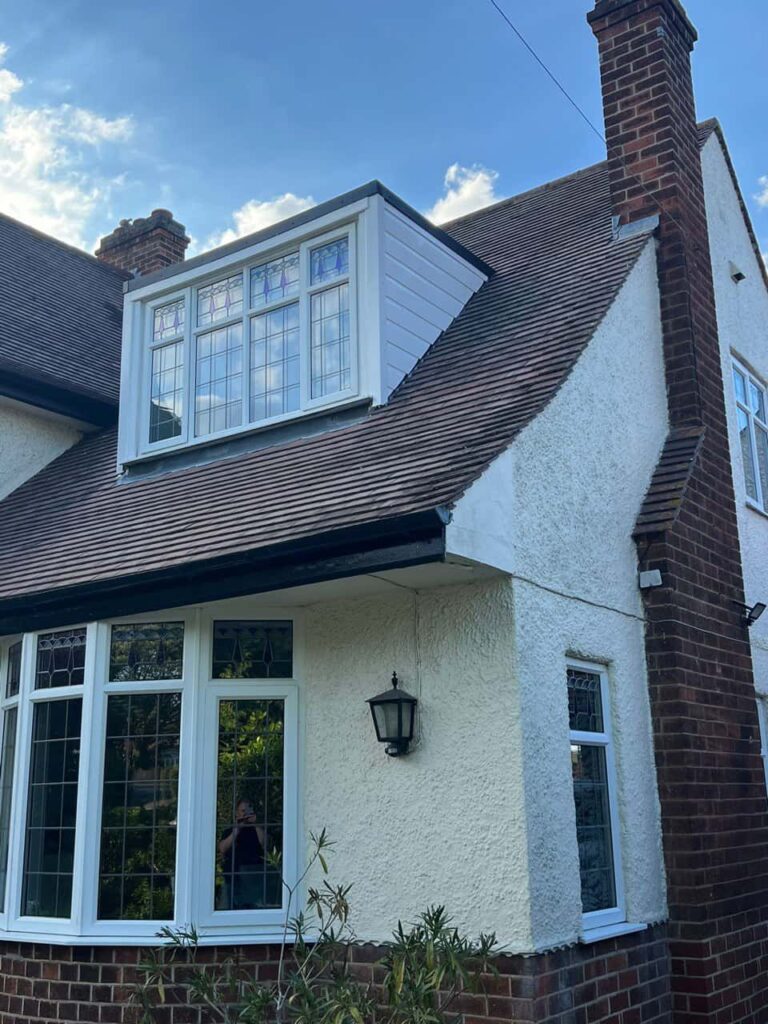
Dormers provide additional headroom, natural light and usable space within a roof, but their junctions with the main roof can be vulnerable to water ingress. Two areas that require particular attention are the dormer cheeks and side abutments. These sections connect different roof surfaces and materials, creating junctions where rainwater can enter if the detailing becomes damaged or deteriorates.
For property owners in Broughton Astley, Leicestershire, understanding why leaks develop around these areas can help identify roofing problems before they cause more extensive damage. A careful inspection by an experienced roofing professional can establish where water is entering and what repairs are needed.
Understanding Dormer Cheeks and Side Abutments
Dormer cheeks are the side sections of a dormer structure. Depending on the design, they may be finished with tiles, slate, lead, cladding or another external material. Side abutments are the junctions where these sides meet the main roof covering.
These connections need to prevent water from passing beneath the external materials. Flashings, soakers, coverings and correctly formed joints all contribute to keeping the roof watertight.
Because the junction involves different surfaces meeting at an angle, even a relatively small defect can create a route for rainwater to enter the roof structure.
Damaged or Deteriorating Lead Flashing
Lead flashing is commonly used to protect the junction between a dormer and the surrounding roof. It directs rainwater away from vulnerable gaps and towards the roof drainage area.
Over time, flashing can become split, lifted or displaced. Poorly secured sections may also move, particularly where the materials have been exposed to repeated changes in temperature and weather.
When flashing no longer forms an effective seal, rainwater can travel behind it and reach the underlying timber or roof space. Repairs need to address the damaged section and restore the correct overlap and positioning, rather than simply covering the visible gap.
Problems with Missing or Poorly Fitted Soakers
Soakers are individual pieces of waterproof material fitted beneath the roof covering along certain abutments. They help prevent water from entering through the joints between adjoining tiles or slates.
If soakers are missing, damaged or incorrectly positioned, water may pass through the gaps and reach the roof structure. This problem can be difficult to identify from ground level because the external roof covering may appear largely undisturbed.
A closer inspection can establish whether the soakers are providing adequate protection and whether any surrounding tiles or slates need to be lifted and refitted.
Movement Between the Dormer and Main Roof
Dormers and the main roof may experience slight movement as building materials respond to temperature changes and general structural conditions. Over time, this movement can place pressure on the junctions between different sections.
If the flashing, sealant or surrounding roof materials cannot accommodate this movement, small openings may develop. These gaps can allow rainwater to enter, particularly during prolonged or wind-driven rainfall.
Repeated movement can also affect previously repaired areas. This is why identifying the underlying cause is important when dealing with recurring leaks around dormer structures.
Cracked or Damaged Dormer Cheek Coverings
The external finish of a dormer cheek provides another layer of protection against the weather. Cracked tiles, loose cladding, deteriorated joints or damaged render can allow moisture to reach the materials beneath.
Water entering through the cheek may travel downwards before becoming visible inside the property. As a result, the location of a ceiling stain does not necessarily indicate the exact point where the roof is leaking.
A thorough assessment should consider the condition of the cheek covering, its joints and its connection to the main roof.
Blocked or Ineffective Water Run-Off
The shape of a dormer can influence how rainwater moves across the surrounding roof. If debris accumulates near the side abutment or water cannot drain away effectively, moisture may remain around vulnerable joints for longer.
Leaves, moss and other debris can interfere with normal water flow. Where drainage is restricted, rainwater may collect against damaged flashing or enter through weaknesses in the roof covering.
Keeping the relevant roof areas clear and ensuring that water can run away correctly helps reduce unnecessary moisture exposure.
Signs That a Dormer Junction May Be Leaking
Some roof leaks become noticeable inside the property, while others remain hidden until moisture has affected the surrounding materials.
Warning signs include:
- Damp patches or discolouration around ceilings and upper walls.
- Peeling paint or bubbling plaster near a dormer.
- Musty smells within the loft or upper rooms.
- Visible staining or dampness around the internal dormer structure.
- Loose, cracked or displaced materials on the dormer cheeks.
- Signs of damaged or lifted flashing along the side abutments.
These symptoms should not be ignored, particularly if they become more noticeable after rainfall. Continued water ingress can affect insulation, timber and internal finishes.
Why Professional Inspection Matters
Finding the exact source of a leak around a dormer requires more than checking the area where water becomes visible indoors. Moisture can travel along roof timbers and beneath coverings before appearing at a different point.
Broughton Astley Roofing Repairs can assess the condition of dormer cheeks, side abutments, lead flashing, soakers and surrounding roof coverings. This helps establish whether the problem is caused by a specific damaged component, deteriorating junction details or a combination of issues.
Once the source has been identified, appropriate repairs can be carried out to restore the roof’s protection and reduce the likelihood of further water ingress. Addressing the underlying defect is particularly important where previous repairs have not resolved the problem.
Conclusion
Roof leaks around dormer cheeks and side abutments often develop because of damaged flashing, missing soakers, deteriorating coverings or movement between adjoining roof sections. Although these defects may initially appear minor, they can allow moisture to reach hidden parts of the roof and cause further damage over time.
For homeowners in Broughton Astley, Leicestershire, arranging an inspection when signs of water ingress first appear can help prevent the problem from becoming more extensive. Broughton Astley Roofing Repairs can investigate the affected areas, identify the source of the leak and recommend suitable repairs. Contact the team to arrange a roofing assessment if you have concerns about a leaking dormer or damaged roof junction.
Call us on: 01455 241 493
Click here to find out more about Broughton Astley Roofing Repairs
Click here to complete our contact form and see how we can help with your roofing needs.